
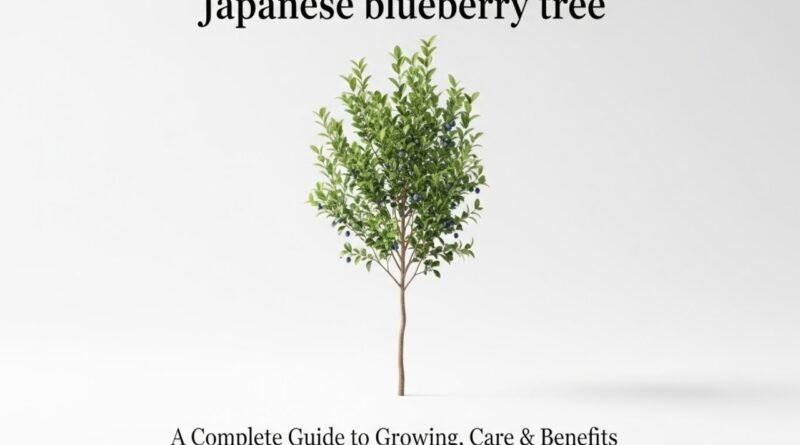
Japanese blueberry tree – A Complete Guide to Growing, Care & Benefits
The Japanese blueberry tree is one of the most beautiful ornamental evergreens used in landscaping today. Known for its glossy foliage, elegant structure, and year-round visual appeal, this tree has become a favorite among gardeners, homeowners, and landscape designers. Whether you’re planning a peaceful garden, enhancing curb appeal, or creating privacy, the Japanese blueberry tree offers charm, shade, and easy maintenance.
This SEO-optimized, fully unique, 1500-word guide explores everything you need to know about the Japanese blueberry tree—its origin, appearance, benefits, growth habits, care requirements, landscaping uses, common challenges, and expert tips.
What Is the Japanese Blueberry Tree?
The Japanese blueberry tree (Elaeocarpus decipiens) is an evergreen tree native to East Asia. Although its name suggests it produces edible blueberries, the fruit is not considered edible for humans. Instead, the berries serve mainly ornamental and wildlife purposes.
You Might Also Like: Travelers Palm
It is admired for:
-
Shiny, dark-green leaves
-
Bronze or copper-colored new growth
-
Pale white, fragrant bell-shaped flowers
-
Small, decorative dark-blue fruit
-
Smooth bark and naturally symmetrical form
The tree is commonly planted in warm regions, especially in USDA zones 8–11.
Why the Japanese Blueberry Tree Is Popular in Landscaping
Landscapers favor this tree for its low-maintenance beauty and evergreen year-round color. It’s planted in residential yards, commercial properties, and city streets because it tolerates pruning, urban conditions, and heat.
Top reasons for its popularity:
-
Year-round foliage
-
Elegant, compact growth habit
-
Can be shaped as a privacy screen
-
Resistant to many pests
-
Beautiful seasonal leaf color
-
Attractive fruit and flowers
-
Works in both formal and modern landscapes
Homeowners love that the tree looks clean and polished, requiring less care than many other ornamentals.
Appearance and Growth Characteristics
The Japanese blueberry tree grows 20–30 feet tall and 10–15 feet wide, depending on the climate and care. In warmer climates, growth may be faster and fuller.
Notable features:
Leaves:
Long, leathery, with a glossy finish. New leaves emerge bright red or copper, creating a stunning contrast.
Flowers:
Soft white, delicate, and slightly fragrant. They appear in small clusters, usually in late spring.
Fruit:
Small, oval, deep-blue berries that darken as they mature. Although not edible, birds may enjoy them.
Shape:
The tree naturally forms a conical or oval shape with dense foliage.
Where the Japanese Blueberry Tree Grows Best
This tree thrives in warm climates with mild winters. It does particularly well in:
-
Southern United States
-
Mediterranean regions
-
Southeast Asia
-
Coastal areas
-
Subtropical climates
It appreciates full sun but can tolerate partial shade. However, too much shade can reduce flowering and produce leggy growth.Ideal Soil Conditions
The Japanese blueberry tree isn’t extremely demanding but grows best in:
-
Well-drained soil
-
Slightly acidic to neutral pH
-
Loamy or sandy textures
-
Soil enriched with organic matter
Avoid waterlogged or heavy clay soils, as poor drainage can lead to root rot.
Watering Needs
Young trees need consistent moisture until established. Mature Japanese blueberry trees become moderately drought-tolerant.
Water recommendations:
-
Young trees: Water 2–3 times per week
-
Mature trees: Deep watering every 7–10 days
-
Hot summers: Increase frequency as needed
-
Winter: Reduce watering to prevent root issues
Mulching helps retain moisture and regulate soil temperature.
Sunlight Requirements
The Japanese blueberry tree thrives in:
-
Full sun (6+ hours of direct light)
Partial shade is acceptable, but growth slows, and foliage may become sparse. Full sun encourages the strongest color, best flowering, and healthiest fruiting.
Fertilizing the Japanese Blueberry Tree
For lush growth, fertilize the tree twice a year—spring and early fall.
Use fertilizers containing:
-
Nitrogen (for foliage)
-
Phosphorus (for root growth)
-
Potassium (for overall health)
Organic compost or slow-release fertilizers work well. Over-fertilizing should be avoided since it can burn the roots.
Pruning Tips for a Perfect Shape
This tree responds very well to pruning. Homeowners often prune it to create:
-
Formal hedges
-
Privacy screens
-
Topiary shapes
-
Narrow columnar forms
-
Low-branching shade trees
Basic pruning guidelines:
-
Remove dead leaves and fruit regularly
-
Trim lightly to maintain shape
-
Prune in late winter or early spring
-
Thin interior branches for better airflow
Avoid removing too much at once, as heavy pruning may stress the tree.
Using the Japanese Blueberry Tree in Landscaping
It works beautifully as:
1. A Privacy Screen
Plant multiple trees in a row to form a dense, living wall. The evergreen foliage creates year-round privacy.
2. A Shade Tree
Larger, mature trees offer excellent shade in courtyards, patios, and gardens.
3. An Accent Tree
A single Japanese blueberry tree makes a stunning focal point.
4. Lining Driveways or Walkways
Symmetric planting creates a formal, elegant appearance.
5. Container Planting (Younger Trees)
Smaller specimens can be grown in large pots for patios or entryways.
Benefits of Growing a Japanese Blueberry Tree
Aesthetic Appeal
Few trees offer the same combination of glossy leaves, seasonal color, and neat structure.
Low Maintenance
Once established, it requires little care beyond occasional trimming and watering.
Wildlife Attraction
Birds and pollinators appreciate the fruit and flowers.
Shade and Cooling
Large trees offer natural cooling during hot months.
Versatile Landscaping Use
Fits both modern and traditional designs.
Common Problems and How to Solve Them
Although the tree is hardy, some issues may arise.
1. Leaf Drop
Often caused by:
-
Poor drainage
-
Underwatering
-
Sudden temperature changes
Ensure consistent moisture and well-drained soil.
2. Sooty Mold
This occurs when sap-feeding insects leave residue on leaves. Treat with insecticidal soap and prune affected branches.
3. Root Rot
Overwatering or heavy soil is the culprit. Improve drainage by amending soil with sand or compost.
4. Nutrient Deficiency
Yellowing leaves indicate a need for fertilizer.
Is the Fruit Edible?
Despite the name, Japanese blueberry tree fruit is not edible for humans. However, wildlife such as birds may enjoy them. Do not confuse them with edible blueberry varieties.
How Fast Does the Japanese Blueberry Tree Grow?
Growth rate is moderate:
-
About 1–2 feet per year
-
Faster in full sun and well-drained soil
-
Slower in cooler climates
With proper care, it becomes a substantial tree within a few years.
How to Plant a Japanese Blueberry Tree
Step-by-step:
-
Choose a sunny location with space for growth
-
Dig a hole twice as wide as the root ball
-
Place the tree at the same depth as the container
-
Backfill with amended soil
-
Water deeply
-
Mulch around the base
Avoid planting too close to structures, since the tree can grow large.
Pests and Diseases
The Japanese blueberry tree is relatively pest-resistant. However, occasional issues include:
-
Whiteflies
-
Scale insects
-
Spider mites
Most can be treated with neem oil, insecticidal soap, or pruning.
How to Use It for Privacy
Plant trees:
-
6–10 feet apart for hedges
-
Allow vertical growth for maximum coverage
-
Prune the sides, not the top, to maintain height
This creates a dense, evergreen privacy barrier.
Cost of Buying a Japanese Blueberry Tree
Prices vary:
-
Small (3–5 ft): $40–$70
-
Medium (6–8 ft): $100–$200
-
Large (10–12 ft): $250–$500+
Landscaping companies may charge extra for delivery and planting.
Japanese Blueberry Tree vs. Other Evergreens
Compared to other evergreens:
-
It is more elegant than Ligustrum
-
Less messy than magnolia
-
More colorful than traditional holly
-
More structurally appealing than pittosporum
Its biggest advantage is year-round beauty with minimal care.
Conclusion
The Japanese blueberry tree is a stunning and rewarding addition to any landscape. With its glossy leaves, red-toned new growth, fragrant flowers, and ornamental fruit, it brings elegance and year-round color. It thrives in warm climates, grows well in full sun, and requires minimal maintenance once established. Whether used as a privacy screen, focal point, or shade tree, it delivers beauty, structure, and enduring appeal.
If you want an evergreen tree that looks refined, grows well in different settings, and enhances the value of your landscape, the Japanese blueberry tree is an excellent choice.